Mark Macedonia
History repeats itself . . . and then there are those resounding historic events whose wallop continues to carry a punch while the calendar flips through decades and centuries, like sound waves traveling incessantly through space and time.
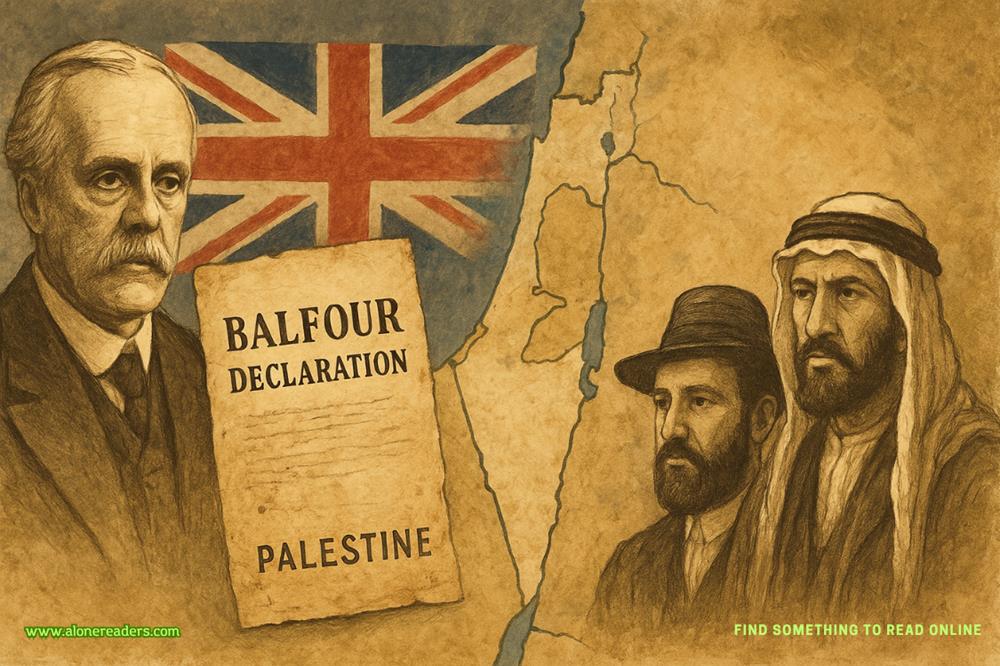
On November 2, 1917 the government of Great Britain issued a declaration composed of a single paragraph containing 67 words. It is known as the Balfour Declaration and this influential moment in history continues to have a lasting impact on today’s current international events.
Our story begins inside the Russian Empire during the 19th century. Anti-Semitism was very strong within Russia where most Jews were confined to an area of Eastern Europe known as the “Pale of Settlement”—present day Belarus, Lithuania, Poland, Moldova, and Ukraine. The fact that Jews were falsely blamed for the assassination of Czar Alexander II in 1881 only amplified Russian anti-Semitism. As a result, the Russian government passed the May Laws in 1882 which imposed economic restrictions on Jews, limited their property rights, and prohibited Jewish settlement in rural areas. What followed was a massive Jewish exodus from the Russian Empire between 1882 and 1914 that resulted in the emigration of two million Jews to Western Europe, South Africa, Argentina, Canada and the United States.
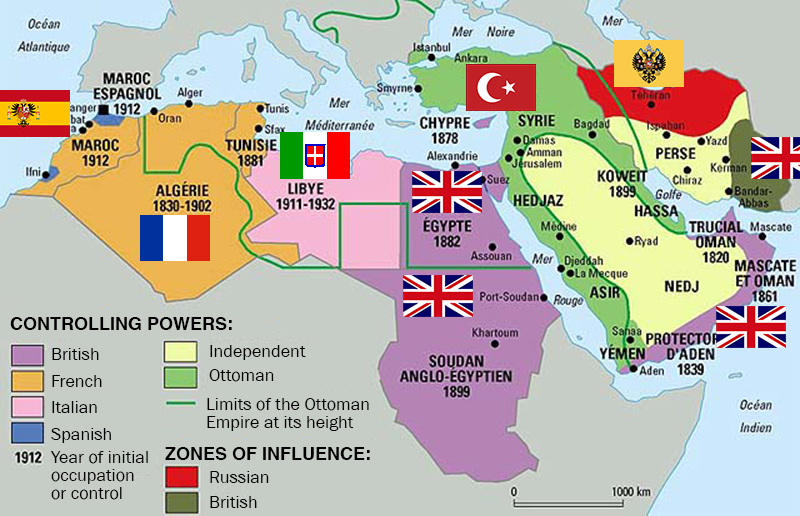
In 1914 The Great War (World War I) erupted, throwing the world into a maelstrom. The United States eventually entered the war in 1917 on the side of the Allies who were battling an alliance composed of Germany, Austria-Hungary, and the Ottoman Empire. American soldiers saw action mostly against German troops in Western Europe, while the British, French, and Russians fought on two fronts, with the Ottoman Empire being one of their formidable enemies on the Eastern Front. At the time, the borders of the Ottoman Empire covered a vast portion of the Middle East, which included the territory of Palestine (present day Israel) where Jerusalem—the most sacred city for Christians, Jews, and Muslims—is located. Because of Palestine’s proximity to Egypt and the Suez Canal, geographically the location of Palestine was vital to the economic interests of the British who controlled the canal. It was no secret that the waterway was the lifeline linking Great Britain to her greatest colony of the time period, India. Thus, the thought of losing control of the Suez Canal to the Germans or Turks was unthinkable for the British. In addition, Great Britain recognized both the financial and political importance of encouraging the support of influential American Jews as the war continued to drag on. Finally, there was the realization that the British might benefit by making Jewish and Arab allies in the Middle East, coercing these groups to organize an insurgency against the Ottoman Turks.
At the time, the population of Jews living in Palestine was small—less than 100,000 of a total of 700,000 people. Leaders in Great Britain in coordination with leaders of Zionism (the idea of establishing a homeland for Jews), decided that the time was right to designate Palestine as the Jewish homeland. The result was a letter from the British Foreign Secretary Arthur James Balfour to a prominent leader of the British Jewish community, Lord Walter Rothschild, communicating British support for “the establishment in Palestine of a national home for Jewish people.”
By November of 1918, The Great War was over and Great Britain and France divided the spoils of the now obsolete Ottoman Empire among themselves, applying the term “mandate” to their new territorial possessions. Great Britain assumed responsibility of the Palestinian Mandate. At this point, the Jewish population of Palestine had been reduced to approximately 60,000. Over the following three decades that number increased dramatically, especially during the 1930s and early 1940s as a result of Jews fleeing Nazi German persecution under the leadership of Adolf Hitler.
By 1948, there were an estimated 650,000 Jews now calling Palestine their home. Disharmony and violence between Arabs and Jews in Palestine had begun to grow steadily since the end of World War I as a result of the rapid rise in population, and Great Britain—already wearied from the chaos of World War II—had become financially, militarily, and politically exhausted with trying to keep the peace in Palestine. The result was that the British government concluded its first priority was to address the war-torn British Isles, and decided to abandon the mandate, withdrawing from Palestine. Soon after, the Jewish population declared the birth of modern Israel as a Jewish state; although the estimated population of Arabs living in Palestine had risen to 1.3 million, surpassing the number of Jews.
Since the creation of modern Israel in 1948, Israel and Arab states have fought seven major wars, which does not include Israel’s battles against non-state organizations such as the Palestinian Liberation Organization, Hezbollah, and Hamas.
The British strategy of dangling the prospect of establishing independent nations for Jews and Arabs after an Allied victory in The Great War, proved ultimately successful in defeating the Ottoman Turks and tearing their empire apart. Yet, in its wake, the strategy left a lasting legacy of turmoil in the Middle East as the historic “echoes” of the Balfour Declaration continue to reverberate throughout the annals of present day.