Mark Macedonia
Election day in the United States is a little more than two weeks away. However, it’s no secret that our nation’s midterm elections have throughout history experienced a lower voter turnout than does the presidential election. On the ballot every two years are a variety of federal, state, and local politicians. Most notably, all 435 seats in the House of Representatives and one third of the seats in the U.S. Senate (senators serve 6-year terms) are up for grabs. And although the founding fathers of our nation developed a brilliant system in establishing three branches of government with the idea that each branch should work to check and balance the others, the significance of the U.S. Congress seems to be either misunderstood or unappreciated by many Americans. With this in mind, allow me to revisit a historical event in our nation’s history that highlights the importance of the midterm election.
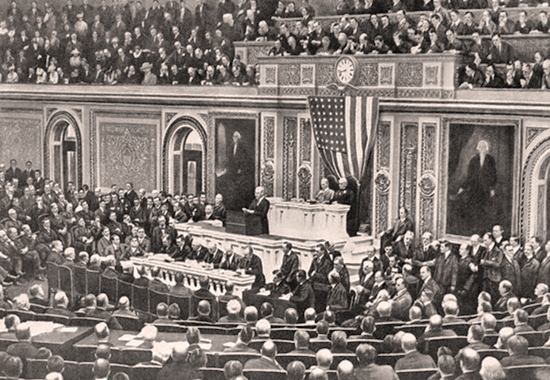
By October 1919, the guns of The Great War, also known as World War I had been silenced for eleven months. Despite the United States’ late entrance into the war in April of 1917, the addition of American soldiers and arms into the conflict proved to be instrumental in bringing about victory for the Allies over Germany, Austria-Hungary, and the Ottoman Empire. This fact elevated the United States into the status of a world power and President Woodrow Wilson became an influential world leader. Even before the war was over, the world listened carefully to Wilson as he delivered his famous “Fourteen Points”—a vision for ending the war, while also contributing proposals on how the world may work to avoid a second great war. One of those proposals was to create an international body of diplomacy where sensible dialogue could take place in an attempt to avoid the outbreak of war between two or more disputing nations. It was called the “League of Nations”.
On October 19, 1919, exactly 107 years ago today, the U.S. Senate was faced with a vote to permit the United States to join the new League of Nations. As a result of the midterm elections in 1918, Republicans held a narrow majority in the Senate by only two seats, and the Republican leader Henry Cabot led opposition to Democratic President Wilson’s desire to join the League. A two-thirds majority was needed to approve the U.S. commitment to the League of Nations. That vote fell short, and thus the United States never joined the League despite the fact that newspaper polls and petitions of the time period indicated that most Americans supported the idea of the United States joining the international body.
Many historians believe that the absence of the United States as a member to the League of Nations weakened the postwar international order and made it difficult to deter the objectives of aggressive nations such as Italy, Japan, and Germany. The result was the advent of the greatest international conflict in world history—World War II.
Yes, this election year may be only the midterms but of all three branches of government, the voices of average American citizens are proclaimed loudest in Congress—the branch where the people speak. There are some “career politicians” who would rather you not believe that fact. But don’t buy into it. Get out and vote so that common sense may echo throughout the halls of Congress and not the cackle of partisanship distorting judgment.