Mark Macedonia
It’s October, and of course the North American continent is once again entrenched in what has become known as the “hurricane season”—June 1 through November 30. For good reason, many Americans certainly fret the potential birth of devastating storms this time of year; however, there were moments in North America’s recent history where inclement weather actually aided the American cause and set the course for United States history. For example, after the Battle of Long Island in August of 1776, General George Washington’s Continental Army was trapped by a British army in Brooklyn Heights, New York. With the aid of strong winds and the stealth provided by a dense fog, Washington organized a massive evacuation of his forces that went undetected by the British. Were it not for the inconvenient weather, Washington’s army may have been destroyed early in the war.
Fast forward to August of 1814 when the British laid siege to Washington, D.C. during what has come to be known as the War of 1812. The British army set fire to many significant buildings in our nation’s capital including the President’s House (later referred to as the White House) when suddenly, a ferocious storm appeared. The tempest unleashed tornadic winds accompanied by torrential rains that extinguished many of the fires and saved the capital from mass destruction.
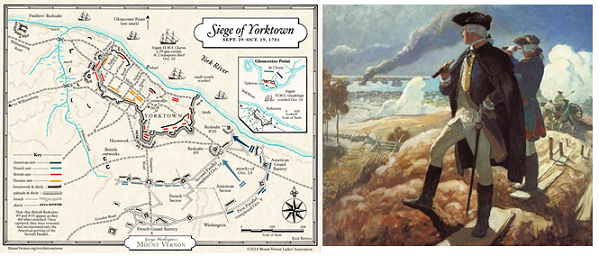
Being that today’s date is October 19, allow me to remind you of another interesting story from the annals of American history involving the assistance of weather. Two hundred and forty-five years ago in August of 1781, British General Charles Cornwallis brought an army of 7,500 British troops to Yorktown Peninsula in Virginia, which is surrounded by the York River to the north, the James River to the south and the Chesapeake Bay to the east. Prior to that moment, Cornwallis’ army had achieved some success sweeping through the Southern colonies and now the general believed controlling Virginia was key to ending the American Revolution.
In the meantime, through an effective colonial spy network, General Washington successfully deceived the British into believing that the continental army was planning to lay siege to New York City, which had been occupied by British troops since it fell in 1776. As a result, British Rear Admiral Sir Thomas Graves focused moving his fleet toward New York. This allowed a French fleet commanded by Admiral de Grasse to sail unopposed into Chesapeake Bay. At the same time, General Washington led 8,000-9,000 troops into Yorktown and was joined by 7,000-8,000 French troops commanded by General Comte de Rochambeau.
By September, Graves sailed his fleet into the Chesapeake Bay only to encounter the French naval blockade of Yorktown Peninsula. The Battle of the Chesapeake ensued and ended with a French victory. Soon after, Cornwallis realized that he was surrounded by American and French forces on land as well as the French navy on water, and on September 28 the armed conflict on land commenced.
By October 16, the British were running low on supplies and Cornwallis attempted to ferry part of his army across the York River to escape; but a violent storm suddenly appeared blocking his escape. Imagine how history may have been altered had Cornwallis and his army managed to safely cross the river.
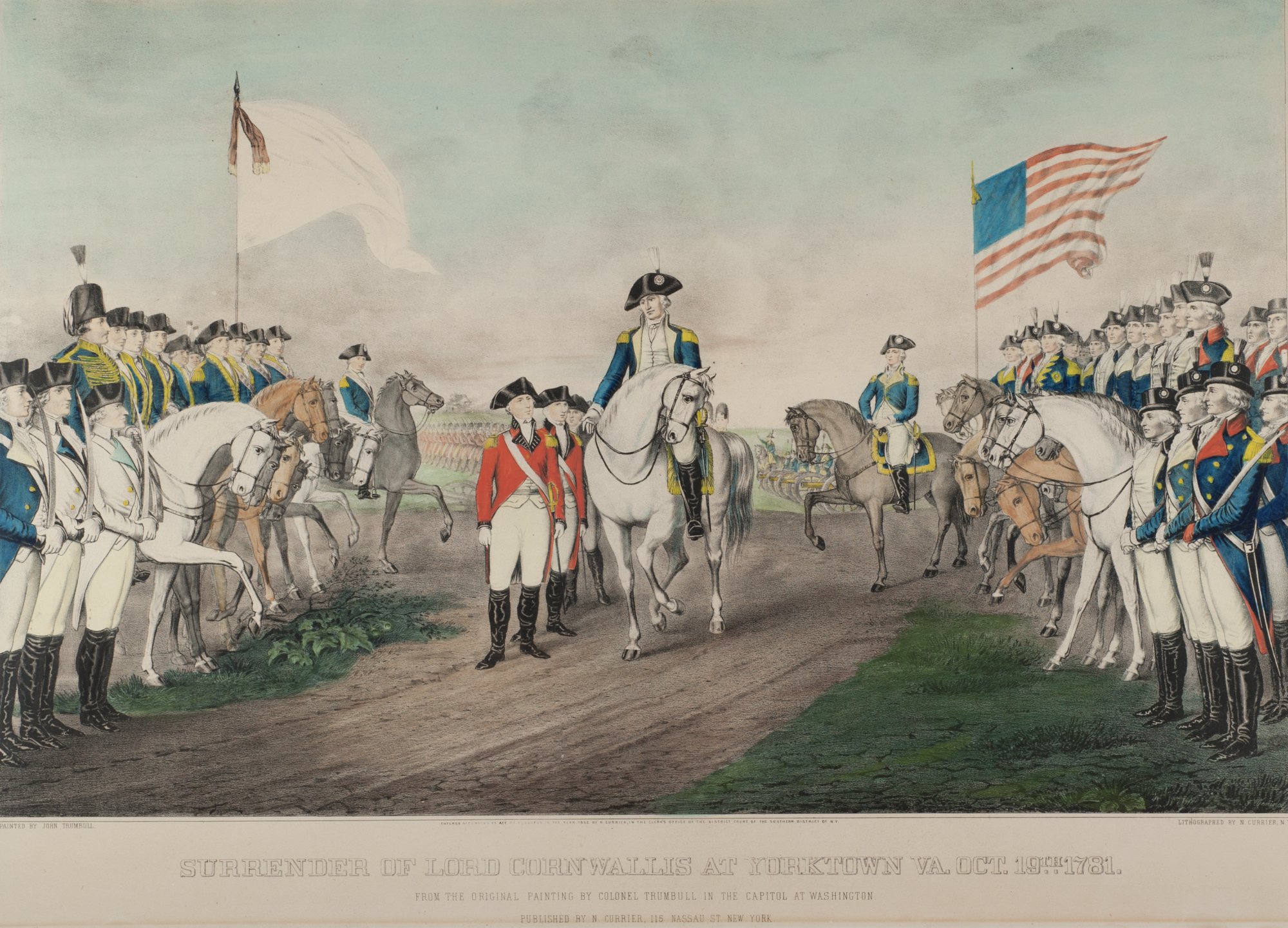
Finally realizing that he was defeated, Cornwallis surrendered his army on October 19, 1781. The proud British general feigned being ill, rather than surrender his army to the American commander in person. Instead, Cornwallis sent his second-in-command, Charles O’Hara in his place. In turn, Washington declined to receive the British general’s sword, and commanded an American officer named Benjamin Lincoln to accept it in his place. Incidentally, it was Lincoln who had surrendered his sword to Cornwallis when the British captured Charleston, South Carolina in 1780.
Call it Providence, or very good luck. Nevertheless, there have been times in American History where stormy weather has been welcomed.