

Mark Macedonia
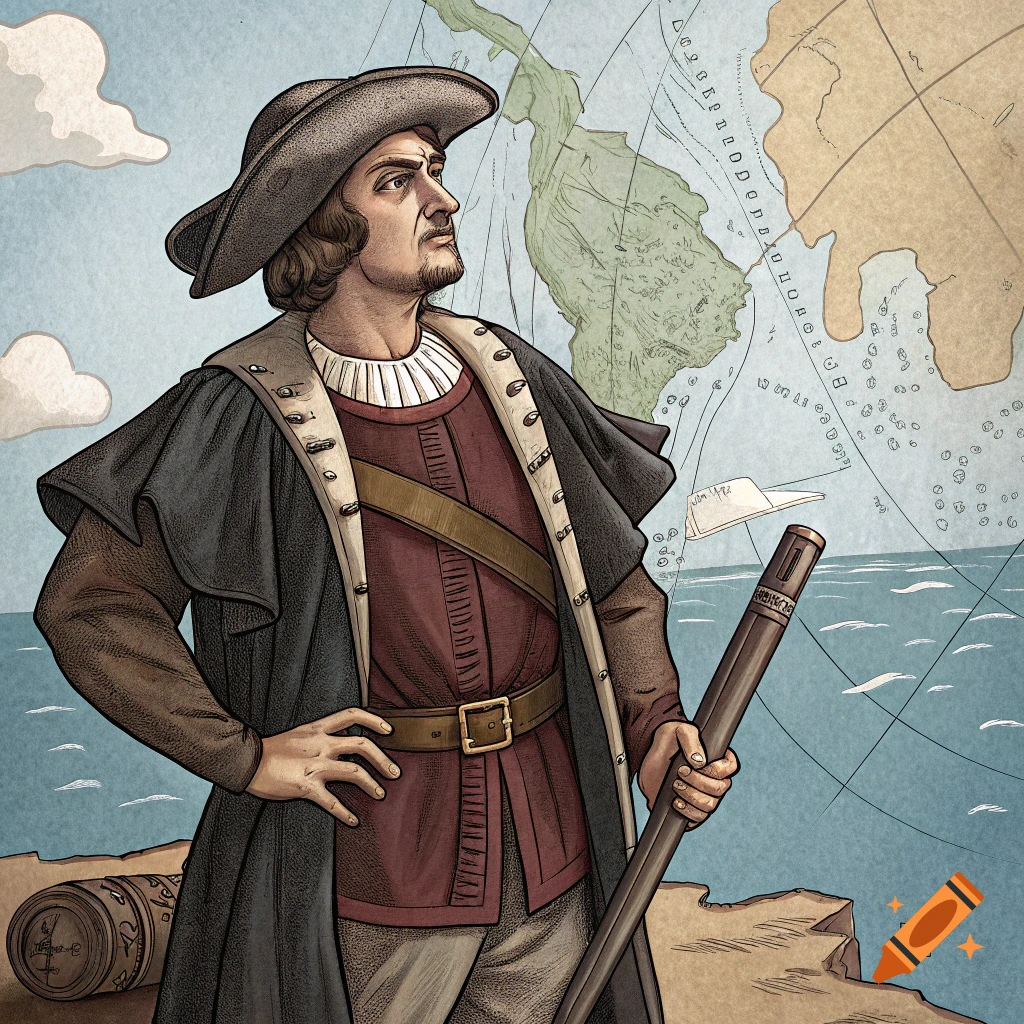
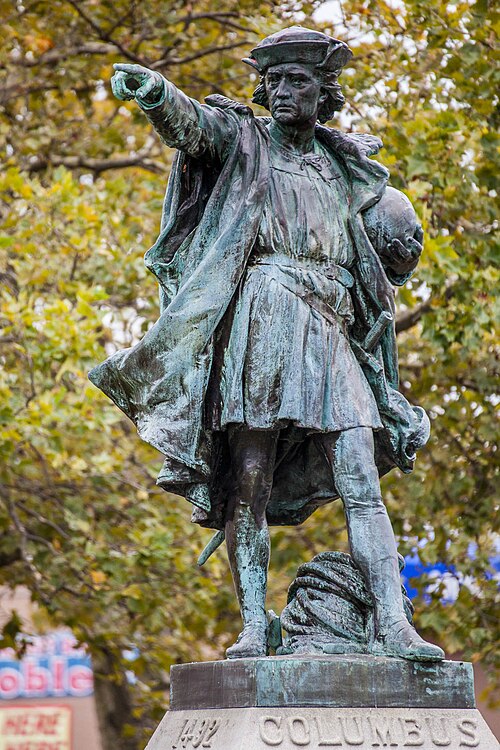
Columbus Day, 2026—the 89th anniversary of its creation as a federal holiday in the United States. President Franklin Delano Roosevelt was responsible for its inception with his proclamation in 1937. But the decision to recognize Columbus’ achievement as an influential explorer of the “New World” harkens back to 1792 in New York City. It was a time when the young United States—on the heels of its victory in the Revolutionary War with Great Britain—was attempting to forge an identity that did not involve the British monarchy. The year 1792 was the 300th anniversary of Columbus’ arrival in what is today San Salvador Island in the Bahamas.
Fast forward to 1992 and if you’re as old as me, you may remember how the opinion of Columbus’ initial voyage was suddenly transformed into a dark chapter in the history of European colonization of the Americas. Instead of celebrating European achievement as providing the building blocks for our nation, the discourse on the arrival of the Europeans shifted to ethnocentrism, prejudice, racism, enslavement, warfare, disease, and cultural destruction. Certainly, the Spanish conquest of indigenous peoples of the Americas that followed Columbus’ voyages set this dark chapter into motion. This was followed by the African slave trade, as well as decades of persecution suffered by many other immigrants arriving to the United States. Suddenly, Columbus had become a villain. In some U.S. cities, Columbus statues were vandalized and in many others the statues were taken down.
There is no doubt that critics of Columbus have a valid argument upon examination of the legacy of suffering listed above; however, the arrival of the Europeans to the Americas also contributed to an exchange of plant and animal species that have benefited peoples in every corner of the globe. In addition, the importation of gold and silver from the Americas led to the growth of commercial capitalism, paving the way for a global economy in the modern era, as well as helping to finance the Industrial Revolution. Keep in mind also that the United States has, for much of its history, been a haven for immigrants fleeing oppression from other nations, as well as an example for democratic government.
Did Columbus know what would transpire as a result of his arrival to the new continent situated across the Atlantic Ocean? Of course not. Not only could he not foresee the future, but he was a product of his time period. And as for his apparent lack of compassion for another group’s cultural values when comparing them with his own, Columbus lived in the 15th and 16th centuries. For one to assume that Columbus should have acted with the same sympathetic mindset in treating fellow human beings as we strive to do today, is to suggest that the critic is deficient in understanding the evolution of human history. By the way, take a close look at the news of today—how well has our generation exemplified an understanding for empathy and kindness? Sometimes the 16th century doesn’t seem that long ago.
Finally, if you’re unconvinced that Columbus’ voyage was anything but the impetus for centuries of hardships, cruelties, and injustices on the American continents, then by all means, don’t try to erase history. Allow the statues to remain not as a means to necessarily celebrate the past, but as a way to teach the past, so that future generations will learn about the metamorphosis surrounding the debate of Columbus’ contribution to history. The goal should always be for the next generation to be better than the last.
On a side note, there is a relic from the Second World War that still stands in Poland. It is called Auschwitz—a former Nazi concentration camp with a history of unspeakable horror. The fact that it still stands allows each generation to understand that the barbaric atrocities committed there were very real, and that such darkness can happen again–if we deny the truth. Don’t erase history, embrace it—even those events that make us shudder; for there is always a lesson to be learned.
You cannot judge history with the lense of today.